
Best Long Lasting Niche Perfumes: 2026 Performance Guide
Table of Contents
- Why Niche Perfumes Outlast Designer Formulas
- Best Long Lasting Niche Perfumes: The Performance Leaders
- Niche Fragrance Concentration Guide: Extrait vs EDP
- How to Make Niche Perfume Last Longer
- Niche Perfume Decants for Testing Longevity
- Layering and Application Techniques for Maximum Wear
- Frequently Asked Questions
Last Updated: September 12, 2026
Why Niche Perfumes Outlast Designer Formulas
If a designer fragrance vanishes by lunch, you already understand why people seek out the best long lasting niche perfumes. This guide from Olfactory Outlaws breaks down why artisan compositions hold their structure longer, which profiles deliver the most endurance, and how to test performance before buying.
The core difference is concentration and materials. Niche perfumery builds around higher concentrations of raw materials, natural resins, oud, amber, rather than the lighter synthetic accords of mass-market releases. Designer houses dilute to hit a price point; niche houses build for depth.
Longevity is not a single number. It is the product of concentration, base note weight, and how your skin holds the composition, a fragrance that lasts ten hours on one person may fade in four on another.
Best Long Lasting Niche Perfumes: The Performance Leaders
The longest-lasting niche fragrances share one trait: heavy, resinous base structures. Ignore the opening when evaluating endurance, top notes evaporate within minutes. What persists is the base.
Below, we break down the performance leaders by profile and attach a blind-buy risk factor to each, so you know whether to sample first or commit.
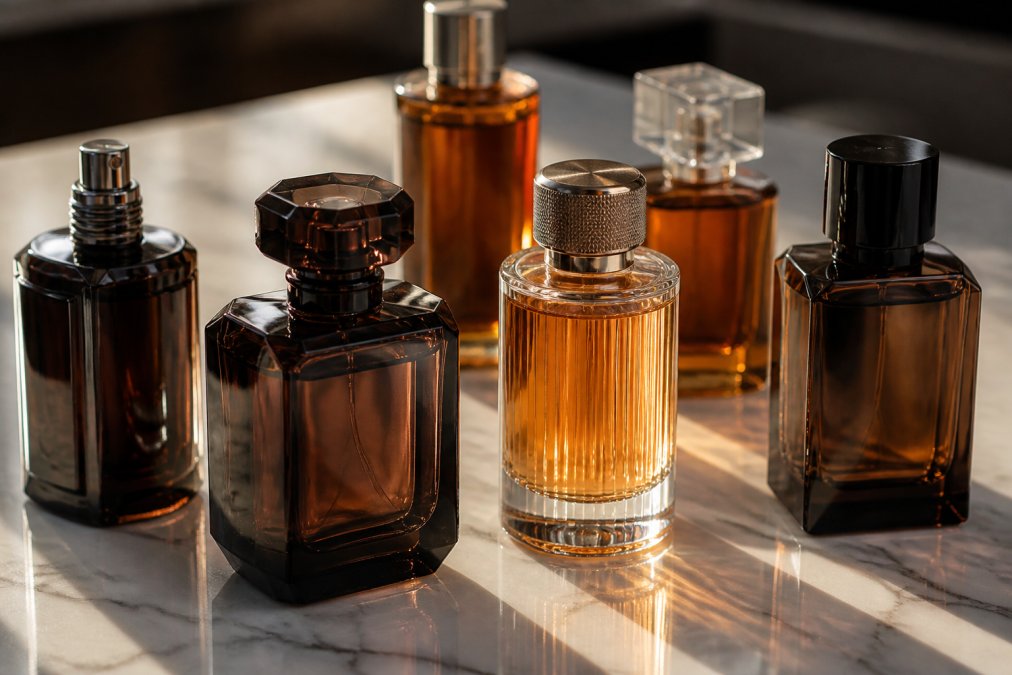
Resinous and Amber-Dominant Profiles
Amber and resin compositions are the workhorses of longevity. Labdanum, benzoin, myrrh, and frankincense form dense molecular structures that cling to skin and resist evaporation. A well-built amber can project for eight hours or more and linger on fabric for days (PubMed).
These profiles suit cool weather and evening wear; in high heat they can overwhelm a room, so apply sparingly. For a signature scent without heavy oud, an amber-dominant extrait is the safest long-term investment.
Blind-buy risk: Low to moderate. Amber accords are broadly wearable and rarely polarizing. The main risk is sweetness, some lean gourmand, which may not suit wearers who prefer dry or woody profiles.
Oud and Woody Base Notes
Oud, sandalwood, and vetiver anchor some of the most tenacious fragrances in niche perfumery. Oud carries a resinous intensity that often lasts past twelve hours, but authentic oud is expensive and even a small amount dominates (PubMed).
Woody bases are more versatile: sandalwood and cedar provide structure without oud's animalic edge, making them easier in professional settings.
Blind-buy risk: High for oud, low for sandalwood and cedar. Oud is the single most polarizing note in niche perfumery, some wearers detect a barnyard or medicinal facet that others find rich and complex. If you are new to oud, sample before you buy.
Gourmand and Vanilla Bases
Gourmand compositions built on vanilla, tonka bean, and caramel are not traditionally classified as "long-lasting" like resins, but modern gourmand extraits rival amber for endurance. The sugar-derived molecules in tonka and vanilla are heavy and slow to evaporate, and with a musk fixative they hold for eight to ten hours.
The risk with gourmands is olfactory fatigue, they are so familiar your nose stops registering them, making them feel shorter-lived than they are. They also perform poorly in heat, where sweetness turns cloying.
Blind-buy risk: Low to moderate. Gourmands are the most broadly appealing niche category, making them a safe entry point. The main risk is over-familiarity, if you want to smell distinctive, a gourmand may not deliver.
Performance Comparison by Profile
Profile |
Key Materials |
Typical Longevity |
Best For |
Blind-Buy Risk |
|---|---|---|---|---|
Amber and resin |
Labdanum, benzoin, myrrh |
8-12 hours |
Evening, cool weather |
Low to moderate |
Oud |
Agarwood, patchouli |
12+ hours |
Statement wear, collectors |
High |
Woody |
Sandalwood, cedar, vetiver |
6-10 hours |
Daily wear, office |
Low |
Gourmand |
Vanilla, tonka, caramel |
6-9 hours |
Casual, cold seasons |
Low to moderate |
How to Use the Risk Factor
A high blind-buy risk does not mean a fragrance is bad, it means the odds of disliking it without testing are higher. The rule: high risk, buy a decant first; low risk, a full bottle is a reasonable bet.
Niche Fragrance Concentration Guide: Extrait vs EDP
Concentration is the biggest lever on how long a fragrance lasts. A niche fragrance concentration guide starts with one rule: the higher the percentage of perfume oil, the longer the wear.
Here is how the tiers break down:
- Eau de toilette (EDT): roughly 5-15% oil. Light, fresh, short-lived. Rare in niche.
- Eau de parfum (EDP): roughly 15-20% oil. The niche standard. Good balance of projection and endurance.
- Extrait de parfum: roughly 20-40% oil. Dense, close to the skin, and the longest-lasting tier available.
A common mistake is assuming extrait always projects more. It does not: extrait sits closer to the skin and lasts longer, while EDP throws further but fades sooner. Want a scent trail across a room? Choose EDP. Want it detectable at midnight? Choose extrait.
For anyone learning how to make niche perfume last longer, the first step is simply reading the concentration label before you buy. The International Fragrance Association standards on fragrance materials provide useful background on how these concentrations are regulated.
How to Make Niche Perfume Last Longer
Longevity is not fixed at the bottle. How you store, apply, and layer a fragrance changes its performance measurably.
Skin Chemistry and pH Impact
Skin chemistry and pH impact how a fragrance develops and how long it holds. Dry skin sheds scent faster than oily skin because oils trap and slow the release of aromatic molecules. If your skin runs dry, moisturize first, an unscented lotion extends wear by hours.
Body heat also plays a role. Pulse points, wrists, neck, and behind the ears, run warmer and push the fragrance outward. Spray there, but do not rub. Rubbing crushes the top notes and accelerates the dry down.
Storage and Maturation
Heat, light, and oxygen degrade a fragrance over time. Store bottles in a cool, dark place, ideally in their original box, a bathroom shelf is the worst spot because of humidity swings.
Maturation is different. Many niche compositions benefit from maceration, a resting period after opening that lets materials blend, a fragrance sharp on day one often rounds out after a few weeks. Batch variation means two bottles of the same scent can perform differently, so judge across several wears.
Niche Perfume Decants for Testing Longevity
Niche perfume decants for testing are the smartest way to evaluate performance before buying a full bottle. A decant is a small portion of the original fragrance, transferred from the manufacturer's bottle into a travel-sized atomizer, authentic juice in a wearable quantity.
You cannot judge endurance from a single spray at a counter. You need to wear a fragrance for a full day, across different temperatures and activities, to know how it behaves on your skin, and a decant lets you do that without committing to a full bottle.
At Olfactory Outlaws, we built our decant program around exactly this problem. Our concierge team helps you select scents that match your profile, then ships curated decants so you can wear-test before investing.
If you are unsure whether decants are worth it, start with three: one amber, one woody, one wildcard. Wear each for a full day and note when it fades. That week of testing tells you more than any review.
Layering and Application Techniques for Maximum Wear
Layering is the most underused technique for extending wear, but most guides stop at "moisturize first." The mechanism matters more than the ritual. Fragrance molecules evaporate at different rates depending on molecular weight and vapor pressure: heavy base molecules like labdanum, benzoin, and sandalwood evaporate slowly, while light citrus and aldehydes vanish in minutes. Layering creates a slower-evaporating substrate that traps lighter molecules against the skin.
The Fixative Principle
A fixative is any material that slows evaporation. In commercial perfumery, that means resins, musks, and certain woods; at home, an unscented oil-based moisturizer, a matching body oil, or a single-note base like vanilla absolute or amber accord. The goal is not to add scent but a molecular anchor.
A practical layering routine built on that principle:
- Apply an unscented moisturizer to pulse points and let it absorb fully, damp skin dilutes the fragrance rather than holding it.
- Apply a base layer that shares a base family with your primary scent. An amber base under a woody oud, or a vanilla base under a gourmand, creates a continuous dry-down instead of a clash.
- Spray your primary fragrance over the base while it is still slightly tacky, not wet. This is when the two layers bind best.
- Spray once on clothing at six to eight inches. Fabric holds scent far longer than skin because it lacks body heat and sweat, but test first, some resins stain light fabrics.
- Do not rub. Rubbing crushes the top-note molecules and accelerates the dry-down.
Skin Type Changes the Routine
Dry skin sheds scent faster than oily skin because sebum traps and slowly releases aromatic molecules. If your skin runs dry, the moisturizer step is not optional, it is your single biggest lever. A fragrance that lasts four hours on dry skin often lasts eight on well-moisturized skin, while oily skin can skip the base layer and still perform.
Body heat also matters. Pulse points, wrists, neck, behind the ears, inside the elbows, run warmer and push fragrance outward faster, giving stronger projection but sometimes shorter total wear. For maximum duration over projection, apply to the chest and forearms, where heat is lower and evaporation slower.
Application Count and Olfactory Fatigue
Two to three sprays is usually enough for an extrait. More does not extend longevity; it overwhelms the room and accelerates olfactory fatigue, where your nose stops registering a scent you are wearing, which is why you think a fragrance has faded when others can still smell it. If you suspect fatigue, step outside for five minutes; your nose resets.
Frequently Asked Questions
How can you tell if a niche perfume will have good longevity before buying?
Check the concentration first: extrait de parfum typically lasts 8-12 hours, while eau de parfum runs 6-8 hours. Look for base notes like oud, amber, resins, and fixatives such as musk or labdanum, which anchor the scent trail. Reading wear-tested reviews from fragrance community members helps too. Testing with a decant before committing to a full bottle is the most reliable way to judge performance on your own skin.
What is the best long lasting niche perfume for someone new to niche perfumery?
Start with an extrait de parfum or a high-concentration eau de parfum built around amber, oud, or resinous base notes. These olfactory profiles tend to project well and last through a full workday. Ordering niche perfume decants for testing lets you wear a scent for several days before investing in a full bottle. Olfactory Outlaws offers concierge guidance to match you with a signature scent that fits your skin chemistry.
Does skin chemistry really affect how long a niche perfume lasts?
Yes. Skin pH, moisture level, and natural oils all influence how a fragrance develops and how long it lingers. Dry skin tends to absorb fragrance faster, so moisturizing before application can extend wear time. Acidic skin can amplify top notes while muting base notes, while oilier skin often holds scent longer. Testing a fragrance on your own skin, not just a paper strip, is the only way to know its true dry down and longevity.
How should I store niche perfumes to keep them lasting longer?
Keep bottles away from direct sunlight, heat, and humidity swings. A cool, dark cabinet or drawer works better than a bathroom shelf. Properly stored, most niche perfumes maintain their olfactory profile for years. Maceration in the first few weeks after opening can also deepen the scent.