
How to Choose Perfume for Gifts: 2026 Guide
Table of Contents
- Start With the Recipient's Scent Profile, Not the Bottle
- Why Fragrance Discovery Sets for Gifts Beat Full Bottles
- Understanding Fragrance Concentration: EDP vs EDT
- How to Find Signature Scent Clues Before You Buy
- Best Perfume for Gifting: Matching Scents to Occasions
- Allergy, Sensitivity, and Fragrance Etiquette
- Frequently Asked Questions
Last Updated: September 16, 2026
Start With the Recipient's Scent Profile, Not the Bottle
The most reliable way to choose perfume for gifts is to shop the recipient's existing scent profile, the olfactory families, notes, and concentrations they already wear, instead of a bestseller list.
Reading Their Current Fragrance Wardrobe
Start by cataloging what they actually own. Ask to see their collection, or note what they wear on repeat. Most people rotate three to five scents, and the pattern reveals their real preferences.
Matching Olfactory Families to Personality
Olfactory families group fragrances by dominant character and map reasonably well to how people present themselves. Use this as your starting filter.
| Olfactory Family | Typical Character | Often Suits |
|---|---|---|
| Floral | Soft, romantic, bright | Classic, feminine dressers |
| Woody | Grounded, warm, dry | Understated, minimal styles |
| Oriental (amber) | Rich, spicy, resinous | Bold, evening-oriented wearers |
| Fougere | Green, herbal, clean | Traditional, tailored tastes |
| Citrus | Fresh, sharp, energizing | Casual, sporty preferences |
| Gourmand | Sweet, edible, cozy | Playful, comfort-driven noses |
Why Fragrance Discovery Sets for Gifts Beat Full Bottles
Fragrance discovery sets for gifts outperform single full bottles on almost every measure. A discovery set contains several smaller vials or decants, letting the recipient test each on their own skin over time, for a blind buy, that trial period is everything.
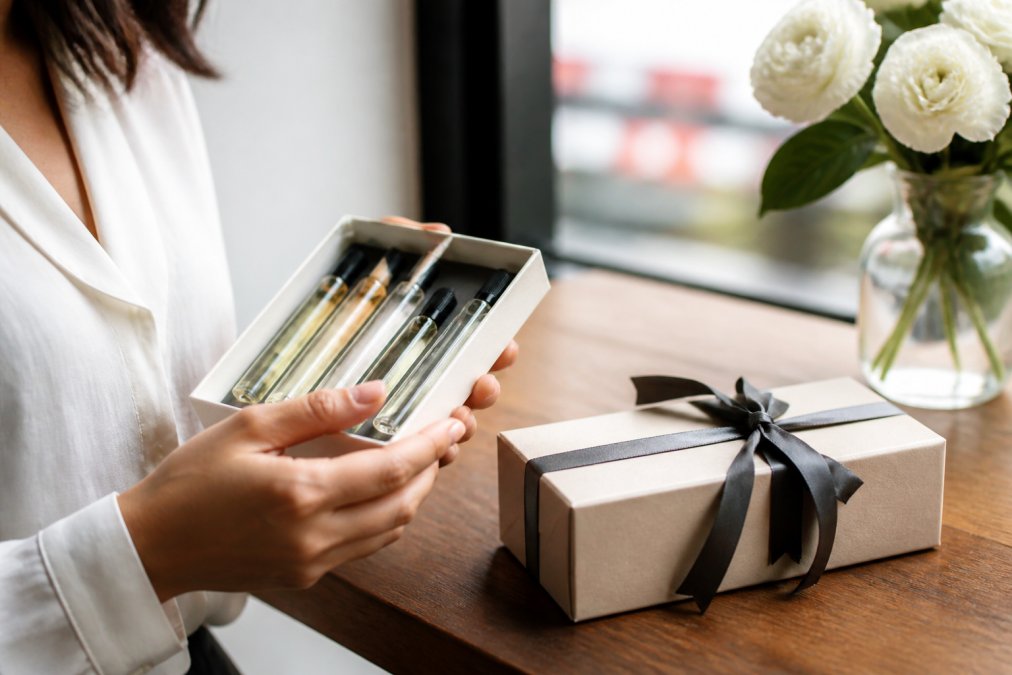
How Discovery Sets Reduce Blind Buy Risk
A blind buy means purchasing a fragrance without smelling it first, the biggest source of gifting regret in this category. Discovery sets neutralize that risk by moving the decision to the person who can test it.
The practical advantages:
- The recipient tests each scent on their own skin chemistry, which changes how a fragrance develops
- They can evaluate longevity and sillage over a full day, not a store sample
- They discover new houses and profiles they'd never have picked
- You get a clear signal for the next gift
Understanding Fragrance Concentration: EDP vs EDT
Fragrance concentration, the percentage of fragrance oil in the alcohol base, determines how strong a scent is, how long it lasts, and how it wears. The three you'll see most are eau de toilette, eau de parfum, and parfum.
| Concentration | Typical Oil Percentage | Relative Strength | Typical Wear Time | Best For |
|---|---|---|---|---|
| Eau de cologne (EDC) | Roughly 2-5% | Lightest | A few hours | Freshening up, hot weather, casual spritzers |
| Eau de toilette (EDT) | Roughly 5-15% | Lighter | Several hours | Daytime, warm weather, light-wear preferences |
| Eau de parfum (EDP) | Roughly 15-20% | Fuller | Most of a day | Evening, year-round gifting, the safe default |
| Parfum / extrait | Roughly 20-30%+ | Richest | Longest | Special occasions, collectors, statement wearers |
| Eau fraiche | Often under 3% | Faintest | Brief | Post-gym, linen sprays, scent-averse recipients |
Concentration Is Only One Variable, Three Others Matter More
Between two bottles at the same concentration, these three factors predict success better than the label:
- Projection (sillage): How far the scent travels off the skin. A high-projection EDT can fill a room; a low-projection EDP stays close. For an office recipient, low projection is kinder regardless of concentration.
- Longevity on their skin: Skin pH, temperature, and dryness shift wear time, dry skin holds fragrance poorly. For dry skin, lean toward higher concentration or an oil-based format.
- Format: A solid perfume, hair mist, or body oil delivers the same scent at lower intensity, often better for someone who doesn't want to announce it.
The Unisex Concentration Trap
Don't overlook unisex fragrance: many modern houses release scents with no gendered marketing, removing a layer of guesswork. But unisex scents often skew toward woody, amber, or musk molecules that read as 'strong' to someone used to light florals. For a first-time wearer, an EDT or eau fraiche version is often the safer entry point than the EDP.
A Quick Concentration Decision Rule
- Recipient wears fragrance daily and knows what they like → match their existing concentration.
- Recipient is new to fragrance or scent-shy → EDT, eau fraiche, or a discovery set.
- Recipient works in close quarters or a scent-free office → low-projection EDT or a solid/hair format.
- Recipient collects or wears fragrance for evenings → EDP or parfum.
- You genuinely don't know → EDP in a discovery set, never a full bottle.
How to Find Signature Scent Clues Before You Buy
A signature scent is the fragrance a person reaches for most often, and it leaves clues everywhere if you know where to look, yet most buyers skip straight to the checkout.
Gather clues from these sources:
- Their bathroom shelf or dresser, where the daily drivers live
- Compliments they've given others ("you smell amazing" is a data point)
- Candles, lotions, and home scents they keep, which reveal preferred fragrance notes
- Social posts or wishlists mentioning specific houses
- A direct, low-stakes question: "What's your go-to scent right now?"
The Sample First Strategy
The Sample First strategy means never buying a full bottle of an untested scent. Start with a discovery set or decants, let the recipient live with each option, then commit to a full bottle only after they've chosen, the most reliable way to avoid a wasted purchase.
Here's how to run it:
- Gather scent clues and identify two or three likely olfactory families
- Order a discovery set or a few decants covering those families
- Gift the set with a note explaining the plan
- Ask the recipient to wear each one for a full day
- Buy the full bottle of the winner
Best Perfume for Gifting: Matching Scents to Occasions
- Birthdays and everyday gifts: A discovery set or a curated decant flight. Low risk, high discovery value.
- Anniversaries and romantic occasions: A full bottle in the recipient's established family, ideally the eau de parfum version of something they already love.
- Holidays and group gifting: A gift set bundling several small formats, which suits multiple recipients or one enthusiastic explorer.
- For a collector: A rare or emerging-house find they don't already own, sourced through a curated edit.
A scent personality quiz earns its place here: many retailers offer short quizzes that map answers to families, and taking one on the recipient's behalf narrows the field fast. It won't replace real testing, but it points you at the right shelf.
Allergy, Sensitivity, and Fragrance Etiquette
Fragrance sensitivity is real, so gifting scent to someone with allergies requires care. If the recipient has ever mentioned reacting to perfumes, strong candles, or scented products, a discovery set of small samples is far kinder than a full bottle, it lets them test without commitment.
A few practical safeguards:
- Choose smaller formats first, so a reaction means a small loss, not a large one
- Avoid gifting to someone with a known fragrance allergy unless they've asked
- Check the return policy before purchasing, and keep the receipt
- Note that opened fragrances are often non-returnable for hygiene reasons
What 'Opened' Actually Means, and Why It Kills Most Returns
Fragrance is treated as a cosmetic product, and most retailers classify a bottle as 'used' the moment the seal is broken or the sprayer is primed, even after one spritz. Once 'used,' the return window typically closes, leaving a bottle they can't wear and you can't return.
- Sealed-only returns: The bottle must be unopened and in original cellophane. Useless if they try it and hate it.
- Opened-with-receipt returns: Some larger retailers accept opened cosmetics within a set window (often 30-90 days) for store credit or exchange, sometimes with a restocking fee. The most gift-friendly pattern, but it varies by store and purchase channel.
- Final sale / no returns: Common for niche houses, decants, discovery sets, and marketplace items. Once it ships, it's yours.
Structuring the Gift So 'They Hate It' Isn't a Problem
The cleanest way to remove return anxiety is to design the gift so a miss is built in. Three structures work:
- Discovery set as the gift itself. The recipient chooses their favorite vial; nothing is wasted. Highest utility when you're unsure of their taste.
- Sample-first with a promised follow-up. Gift a decant or sample kit with a note promising the full bottle of whichever one they love. You spend less, and the real purchase is informed.
- Gift receipt plus a stated return window. If buying a full bottle, tell the recipient the return window when you hand it over. It sounds unromantic; it's actually the most considerate thing you can do.
Authenticity and Safety Basics
One more consideration: authenticity. Fragrance is widely counterfeited, and counterfeit bottles can contain unlisted ingredients that trigger reactions the genuine product wouldn't. Buy from a source you trust, an authorized retailer, the house's own site, or a reputable decant service. U.S. Food and Drug Administration guidance on cosmetics and fragrance safety covers labeling and safety basics worth knowing before you buy.
Frequently Asked Questions
How do you choose perfume for someone else without smelling it first?
Focus on what they already wear. Note the fragrance notes in their current bottles, then look for scents in the same olfactory family. If they wear a woody fragrance, stay in that territory. If you are unsure, a discovery set lets them sample several scent profiles without committing to a full bottle. This approach reduces the risk of a blind buy and gives the recipient control over what they ultimately wear.
Is it better to gift a full bottle or a discovery set?
A discovery set is usually the safer choice, especially if you are unsure about their preferences. It lets the recipient test multiple scents on their own skin, where skin chemistry changes how a fragrance develops. Full bottles make sense when you know their signature scent or they have specifically requested one. Discovery sets also work well as a gift for someone exploring niche fragrance for the first time.
What should you look for in a perfume gift set?
Look for variety across olfactory families so the recipient can explore different scent profiles. Check that the set includes eau de parfum or eau de toilette concentrations, not just body mists. A good set includes enough volume per vial for two or three wears, letting the recipient test longevity and sillage properly. If the recipient has sensitivities, check the ingredient list for known allergens before purchasing.
How can you tell if a perfume will suit someone's personality?
Match scent families to how they present themselves. Someone who favors clean, minimal style often gravitates toward citrus or fougere fragrances. A person drawn to bold, expressive fashion may enjoy oriental or gourmand scents. Ask about their favorite candle, lotion, or even shampoo to get clues. If you cannot ask directly, a unisex fragrance in a fresh or woody profile is a reliable middle ground for most personalities.
Choosing the right scent for someone else comes down to investigation and a low-risk first step, not luck. Olfactory Outlaws makes that step easy with curated decants, full bottles, and a concierge team that matches a recipient's profile to the right house and format. Start with a discovery set, let the recipient choose, then commit to the full bottle with confidence. Get started with Olfactory Outlaws and find a fragrance they will actually wear.