
How to Identify Authentic Perfume: 7 Expert Checks
Table of Contents
- Why Authenticity Matters for Your Fragrance Collection
- How to Spot Fake Perfume Packaging
- Perfume Batch Code Checker: Your First Line of Defense
- Scent and Performance: What Fakes Can't Replicate
- Grey Market vs Authentic Perfume: What's the Difference?
- The Dangers of Counterfeit Fragrance
- Buying Safely: Authorized Retailers and Online Marketplaces
- Conclusion: Shop with Confidence
- Frequently Asked Questions
Last Updated: September 13, 2026
Why Authenticity Matters for Your Fragrance Collection
Knowing how to identify authentic perfume protects both your wallet and your health. Counterfeit fragrance is a global problem, and the difference between a genuine bottle and a fake often comes down to details you can check in under two minutes. This guide covers checks our team uses when sourcing niche and designer scents.
Here's the uncomfortable truth most buying guides skip: a fake doesn't just smell wrong. It can contain unregulated chemicals that irritate skin, and it funds an industry with no incentive to follow safety rules. Spotting a counterfeit is the most valuable skill a collector can develop.
The checks below cover packaging, batch codes, scent performance, and the grey market distinction that trips up even experienced buyers.
How to Spot Fake Perfume Packaging
Counterfeiters invest heavily in packaging because it's the first thing buyers inspect. Most fakes fall apart under close scrutiny, if you know where to look.
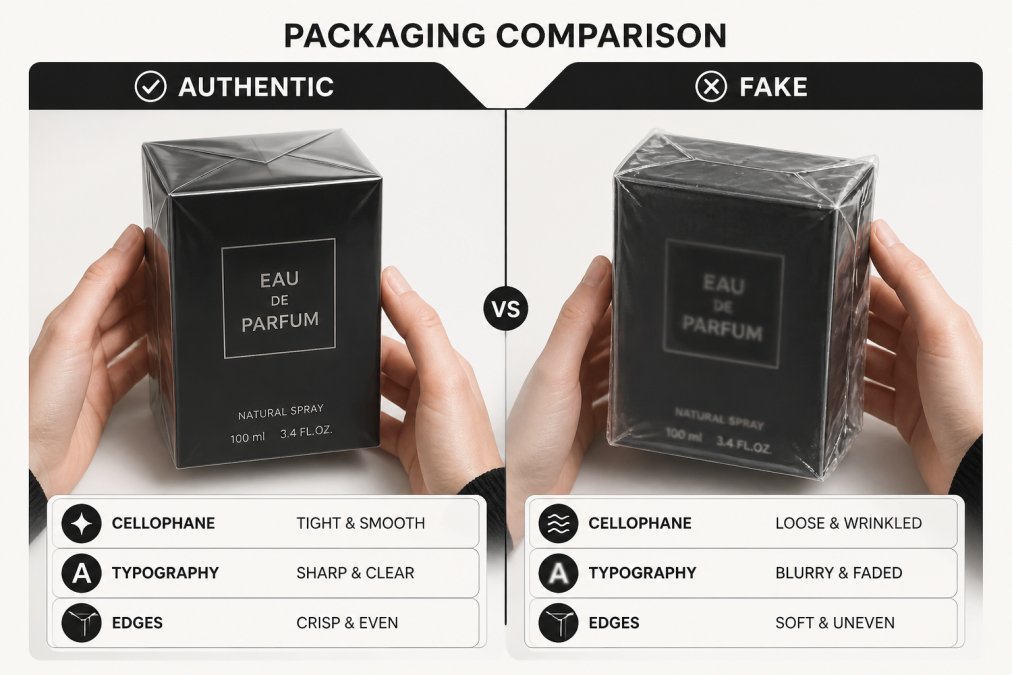
Cellophane and Heat-Sealed Wrapping
Genuine perfume boxes are wrapped in tightly heat-sealed cellophane with clean, even seams. Counterfeits often use loose plastic wrap, visible tape, or misaligned seams. Run your thumb along the seam, if it crinkles unevenly or feels loose, that's a red flag.
Glass Quality and Bottle Details
Authentic bottles use precision glass molding. Hold the bottle to light and look for air bubbles, uneven thickness, or a wobbly base. Genuine caps are weighted consistently, so an unusually light cap signals a counterfeit. A genuine atomizer produces a fine, even mist; fakes sputter or stream.
Typography, Fonts, and Labeling Errors
Font consistency is one of the easiest tells. Genuine houses use identical typography on the box, bottle, and label; fakes mix typefaces, misspell ingredients, or misalign text. Watch for missing volume measurements, wrong country of origin, or a barcode that doesn't match the batch code elsewhere on the packaging.
Perfume Batch Code Checker: Your First Line of Defense
A batch code checker is the fastest way to confirm a bottle's origin. Every legitimate perfume carries a batch code, a short alphanumeric string stamped or printed on the bottle or box, that identifies when and where it was produced.
How to Find and Read Batch Codes
Batch codes typically appear on the bottom of the bottle, the back of the box, or along the crimp of the spray tube. Formats vary by house: four, six, or eight characters. The code usually encodes a production date you can cross-reference against the fragrance's release history, a bottle claiming to be a 2024 release with a 2019 batch code is almost certainly counterfeit.
Using Online Tools and Apps
Several verification apps and websites let you enter a batch code and retrieve a production date. They aren't perfect but catch obvious mismatches. Cross-check the code on the bottle against the box, counterfeiters often print matching codes on both, but the font or placement differs slightly.
Scent and Performance: What Fakes Can't Replicate
Fragrance composition is where counterfeits fail hardest. A genuine perfume unfolds in stages: top notes first, heart notes within 15 to 30 minutes, base notes over the following hours. Fakes skip this progression entirely.
Fragrance Composition and Notes
Authentic fragrances are built on a balanced olfactory profile. Counterfeits use cheaper synthetic substitutes that flatten the scent into a single, sharp blast. If a fragrance smells identical from first spray to last hour, it's not authentic.
Longevity and Skin Reaction
Scent longevity is another reliable test. Genuine eau de parfum lasts six to eight hours on skin; fakes fade within an hour or two. Watch for irritation, redness, or burning, counterfeits often contain high alcohol content or synthetic dyes. If a fragrance irritates your skin, stop using it and dispose of the bottle.
Grey Market vs Authentic Perfume: What's the Difference?
Grey market perfume is genuine product sold outside the manufacturer's authorized distribution channels, not counterfeit. A grey market bottle was made by the original house but may have been diverted from another market, sold without a warranty, or stored improperly. Counterfeit perfume, by contrast, is a fake made to look real.
This distinction matters because grey market bottles are often safe to wear, while counterfeits are not. The problem: grey market listings are frequently used as cover for counterfeits, which is why verification matters.
| Factor | Authentic (Authorized) | Grey Market | Counterfeit |
|---|---|---|---|
| Made by original house | Yes | Yes | No |
| Warranty coverage | Full | None | None |
| Batch code traceable | Yes | Usually | Rarely |
| Safety risk | None | Low | High |
| Typical source | Authorized retailer | Diverted stock | Illegal manufacturing |
The Dangers of Counterfeit Fragrance
Most buying guides treat counterfeit perfume as a wallet problem. It is also a chemistry problem. Because fakes are produced outside any regulatory framework, no agency reviews their ingredients, no manufacturer tests them for skin compatibility, and no one is accountable when a bottle causes a reaction. That is the real risk of buying from an unverified seller.
What Is Actually Inside a Counterfeit Bottle
A genuine fragrance is built on perfumer's alcohol (typically ethanol, sometimes denatured) plus a regulated blend of aroma chemicals, essential oils, water, and preservatives. A counterfeit is built to hit a price point, not a safety standard. Common contaminants found in seized and tested fakes include:
- Methanol, a cheaper alcohol than ethanol that is toxic when absorbed through skin or inhaled in quantity. It is the single most cited contaminant in counterfeit fragrance seizures.
- Diethyl phthalate and other phthalates, plasticizers used to stretch a scent concentrate. They are restricted in cosmetics in many markets and are a known irritant for sensitive skin.
- Urine and animal waste, used in some counterfeit operations as a cheap fixative or to mimic a musky base. This is not urban legend; it appears in customs seizure reports.
- Antifreeze compounds (ethylene glycol and related glycols), occasionally found as a carrier when the counterfeiters cannot source perfumer's alcohol.
- Unlisted synthetic dyes, added to tint the liquid so it matches the real product's color. These are a frequent cause of contact dermatitis.
- Bacterial contamination, because fakes are bottled in unsterile conditions, the liquid itself can carry bacteria that cause skin infections, especially on broken or freshly shaved skin.
The pattern is consistent: counterfeiters optimize for cost and appearance, and safety is whatever is left over.
How the Risk Shows Up on Your Skin
The reaction is not always immediate. A common sequence:
- Immediate stinging or a sharp alcohol smell on first spray, a sign the alcohol base is wrong or the concentration is far higher than the label claims.
- Redness, itching, or a rash within minutes to hours, contact dermatitis from dyes, phthalates, or contaminants.
- Headache, dizziness, or nausea, often a response to methanol or high concentrations of volatile solvents.
- Respiratory irritation, coughing, wheezing, or a tight chest, particularly in people with asthma or fragrance sensitivity.
If any of these happen, stop using the bottle immediately, wash the sprayed area with soap and water, and dispose of the product. Do not try to "use it up" or gift it to someone else.
Why the Financial Cost Is Only Half the Story
Counterfeit fragrance is not a victimless discount. The proceeds fund organized crime networks, and the same supply chains that cut corners on ingredients cut corners on everything else. Houses that spend years and significant R&D budgets developing a single scent lose the revenue that funds the next one. Buying authentic protects your skin, and keeps you from paying into a system with no reason to care whether your bottle is safe.
The Practical Takeaway
You cannot smell or see methanol, phthalates, or bacteria. That is why the visual checks in this guide matter, they are your only pre-purchase filter. When a bottle fails the packaging, batch code, or scent-progression tests, the question is not "is this a good deal?" It is "what else did they cut?"
Buying Safely: Authorized Retailers and Online Marketplaces
Authorized retailers are the safest source for authentic perfume. They buy directly from the manufacturer or an approved distributor, so every bottle carries a traceable batch code and full warranty. Department stores, brand boutiques, and licensed online retailers qualify. If the price is at or near the brand's published retail and the seller is on the brand's own "where to buy" page, you are on solid ground.
Online marketplaces are a different game. Third-party sellers can list counterfeits alongside genuine products, and platforms rarely verify authenticity before a listing goes live. That doesn't mean every marketplace bottle is fake, it means the burden of verification shifts to you. Here is the checklist our team runs before buying from any reseller.
The Seller Vetting Checklist
Run through these in order. A single hard fail is enough to walk away.
- Feedback history, not just feedback score. A 99% rating over 40 sales means less than a 97% rating over 4,000. Read negative reviews for words like "fake," "smells off," "different from store," or "no batch code."
- Account age and listing volume. A seller who joined last month listing 30 bottles of the same discontinued fragrance is a red flag. Established resellers with narrow, consistent inventory are lower risk.
- Original photos, not stock images. Ask for photos of the actual bottle and box, including the batch code stamp, bottle bottom, and spray-tube crimp. Stock images mean the seller doesn't have the item in hand or doesn't want you to see it.
- Batch code photo, in focus, with a timestamp. A seller who cannot or will not send one is telling you something. This is the single highest-value request you can make.
- Price sanity check. Compare against the brand's published retail and other listings. A current-release designer fragrance at 60% off retail is not a bargain, it's a warning. Deep discounts on discontinued or vintage scents are more plausible but still require the same verification.
- Return policy and payment method. Buy only through the platform's protected checkout. A seller asking for peer-to-peer transfer, gift card, or off-platform payment is removing your only recourse.
- Listing language. Vague descriptions ("100% authentic guaranteed!!!"), pressure tactics ("only one left, must sell today"), and refusal to answer specific questions recur in counterfeit listings.
Platform-Specific Notes
- eBay, Look for the "eBay Money Back Guarantee" badge and confirm the listing is covered. "Top Rated Plus" sellers have met higher service thresholds. Use the "Sold Items" filter to see what the seller has actually moved and at what price.
- Mercari, Poshmark, and similar resale apps, Authentication is largely seller-declared. Better for verified vintage and decants than current-release designer bottles. Ask for the batch code photo before you commit.
- Facebook Marketplace and local classifieds, No buyer protection by default. Meet in person if you can, inspect the bottle using the packaging and batch-code checks above, and pay in a way that leaves a record. Cash-only, no-receipt deals are highest risk.
- Discounter and "grey market" sites, Some are legitimate diverters of authentic stock; some are fronts for counterfeits. The batch code check is your filter. If the code resolves to a plausible production date and the bottle passes the visual checks, it's likely genuine grey-market stock. If the code doesn't resolve or the packaging is sloppy, treat it as counterfeit regardless of what the site claims.
What to Do If You Receive a Fake
Do not spray it, wear it, or resell it. Photograph the bottle, box, batch code, and listing before opening a dispute, platforms often require evidence within a short window. File through the platform's resolution center first, then your payment method (credit card chargeback or PayPal dispute) if unresolved. Report the listing to the platform and, for clear fraud, to the FTC at ReportFraud.ftc.gov.
At Olfactory Outlaws, every bottle and decant is sourced through verified channels.
Conclusion: Shop with Confidence
Spotting a fake takes practice, but the checks above cover the details counterfeiters consistently get wrong. If you'd rather skip the guesswork, Olfactory Outlaws sources niche and designer fragrances through verified channels, offers dynamic decants so you can test before committing to a full bottle, and provides personalized concierge guidance to match you with scents you'll actually wear.
Get started with Olfactory Outlaws and build a collection you can trust.
Frequently Asked Questions
Is there an app that can check the authenticity of perfume?
Yes, several apps and websites let you enter a perfume's batch code to check its production date and authenticity. These tools cross-reference the code with brand databases. However, they are not foolproof, as counterfeiters can copy valid codes. For best results, combine batch code checks with physical inspection of packaging, bottle quality, and scent performance. If a deal seems too good to be true, it probably is.
Do fake perfumes smell like the original?
Fake perfumes often mimic the top notes of the original but lack the complexity and longevity of authentic fragrance. They may smell harsh or chemical-like and fade quickly. Authentic perfumes have a balanced composition of top, heart, and base notes that evolve over hours. If a scent disappears within 30 minutes or smells off, it is likely counterfeit. Trust your nose and compare with a known authentic sample when possible.
What is grey market perfume?
Grey market perfume refers to authentic products sold through unauthorized distribution channels, often at a discount. These are genuine fragrances but may be diverted from other markets, have different packaging, or lack brand warranties. Unlike counterfeits, grey market perfumes are not fake, but they can be risky because storage conditions may not be ideal. Always buy from reputable sellers who disclose the source.
What are the health risks of using counterfeit perfume?
Counterfeit perfumes can contain toxic ingredients like diethyl phthalate, high levels of alcohol, and synthetic dyes that may cause skin irritation, allergic reactions, or respiratory issues. Prolonged exposure to unknown chemicals is a serious concern. Authentic perfumes are regulated for safety. To protect yourself, avoid unverified sellers and check for batch codes and proper packaging. Your health is worth the extra diligence.